EDUCATIONAL PURPOSE DISCLAIMER: This article discusses cybersecurity topics strictly for educational and awareness purposes. We do not encourage illegal activity.
Introduction: The SCADA Wake-Up Call
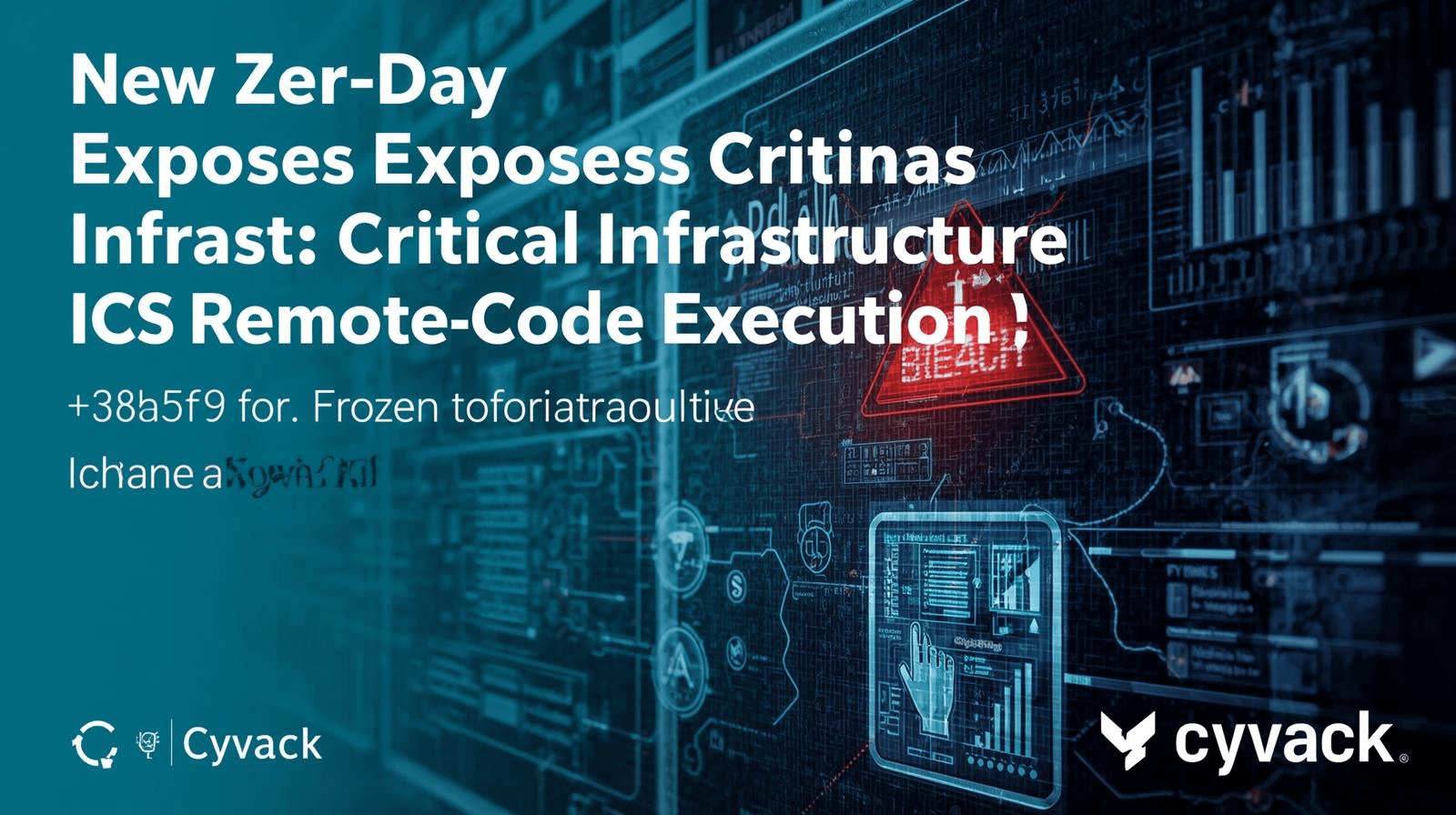
When security researchers publicly disclosed CVE-2025-45721, a critical zero-day in ICONICS GENESIS64—one of the world’s most widely deployed SCADA and industrial control platforms—the industrial cybersecurity community reacted immediately. The vulnerability enables unauthenticated remote code execution (RCE) through a crafted network packet. According to multiple threat-intel analysts, proof-of-concept exploit code is already circulating on underground forums, raising the stakes for organizations that rely on GENESIS64 to manage energy grids, manufacturing lines, water treatment systems, and more.
Within hours, CISA and several EU CERT teams issued emergency advisories. The fear? That attackers—especially nation-state groups—could weaponize this flaw before many operators have a chance to patch.
Why CVE-2025-45721 Is a Worst-Case Scenario for Critical Infrastructure
1. SCADA Systems Control Physical Processes, Not Just Data
GENESIS64 is widely used in: -Energy generation and distribution -Water and wastewater management -Industrial automation and manufacturing -Building management systems (HVAC, sensors, facilities)
A successful exploit doesn’t just compromise a server—it could enable adversaries to: -Manipulate physical controls -Disrupt or halt production -Cause safety failures -Shut down or overload systems
In industrial environments, any outage is measured in millions of dollars, and physical harm is a real possibility.
2. ICS Patching Is Slow—Dangerously Slow
Unlike traditional IT systems, industrial control systems cannot be patched quickly due to:
Operational Downtime Requirements
Factories, power grids, and industrial plants often run 24/7. Taking systems offline for urgent patching may: -Stop production -Disrupt energy distribution -Impact public utilities
Vendor Certification Delays
Many OT systems require vendors to certify patches to avoid compatibility issues that could interrupt operations.
Legacy and Air-Gapped Systems
Some organizations still operate: -Outdated Windows servers -Unsupported hardware -Isolated networks with manual update processes
These environments can take months to patch—far longer than the time needed for attackers to weaponize a zero-day.
3. How Attackers Could Exploit CVE-2025-45721
Unauthenticated RCE Means “No Barriers”
Because the vulnerability involves a malformed packet, an attacker doesn’t need: -Credentials -Access tokens -Privileged accounts -Insider access
If they can reach the SCADA network, exploitation is trivial.
OT/IT Convergence Makes Access Easier
Modern ICS networks are increasingly connected to corporate IT for: -Analytics -Remote monitoring -Cloud dashboards -Predictive maintenance
This eliminates the “air-gap myth,” giving attackers more paths inside.
Nation-State Motivation
CISA and multiple EU CERT teams have highlighted an uptick in: -Energy sector probing -Water facility intrusions -OT reconnaissance campaigns
Groups linked to Russia, Iran, and China have historically targeted similar ICS software—making this zero-day particularly concerning.
Temporary Mitigations Before You Patch GENESIS64
1. Immediately Segment the OT Network
Ensure GENESIS64 servers cannot be accessed directly from: -Corporate networks -Remote users -External-facing systems
Use strict VLANs, firewalls, and one-directional gateways.
2. Monitor for Exploitation Indicators
SOC teams should watch for: -Out-of-spec packets hitting GENESIS64 ports -Unexpected traffic spikes -Communication attempts from IT to OT networks -Unusual process changes or system commands
If your organization has network monitoring tools, deploy custom signatures matching malformed packet patterns.
3. Disable Unnecessary Services
Disable unused GENESIS64 modules or ports to shrink attack surface.
4. Add Temporary Access Controls
If segmentation isn’t possible immediately: -Restrict access to known internal IPs -Require VPNs for remote ICS engineers -Enforce MFA on all remote access accounts
5. Perform an OT Threat Hunt
Look for signs of: -Unexpected engineering workstation activity -Modified ladder logic or HMI configuration -Rogue user accounts -Changes to ICS historian logs
Early detection is often the only chance to stop an OT compromise.
Why Infrastructure Owners Cannot Delay This Patch
Patching in ICS is always a balancing act—but zero-days like this change the risk calculation. A successful exploit on GENESIS64 could: -Trigger outages in regional energy distribution -Contaminate water treatment processes -Cause manufacturing shutdowns -Impact hospital, transportation, or municipal services
Given the availability of exploit code, the window for safe patching is shrinking rapidly. CISA’s advisory emphasizes that critical infrastructure operators must treat this zero-day as immediately actionable, not “patch when convenient.”
Conclusion: The Next 30 Days Are Critical
CVE-2025-45721 is one of the most severe ICS vulnerabilities disclosed in years. The combination of: -Unauthenticated RCE -Widespread GENESIS64 adoption -Long OT patch cycles -Active exploit code circulation
…means critical infrastructure operators must act quickly. If you rely on GENESIS64, begin emergency patching and implement network isolation immediately.
Call to Action:
Need help assessing your exposure? Request our free ICS Zero-Day Response Checklist for OT teams.
Related Articles
-The Rise of AI-Powered Worm-Based Malware -How to Detect CVE-2025-45721 Before Your SCADA System Is Hijacked -AI-Powered Supply Chain Attacks: How One Compromise Can Bring Down Hundreds
References
- CISA ICS Advisory on CVE-2025-45721
- EU CERT ICS Security Notifications
- MITRE ATT&CK for ICS Framework
- Dragos Annual ICS Threat Report
About the Author:** The Cyvack Threat Intelligence Team monitors emerging vulnerabilities and threat actor TTPs targeting critical infrastructure worldwide. Our ICS security specialists provide actionable intelligence for OT environments.