Introduction
Artificial intelligence tools are becoming a common part of everyday work. From writing emails to analyzing data, AI systems can help employees complete tasks more quickly and efficiently.
However, this rapid adoption has also created a new cybersecurity concern known as Shadow AI.
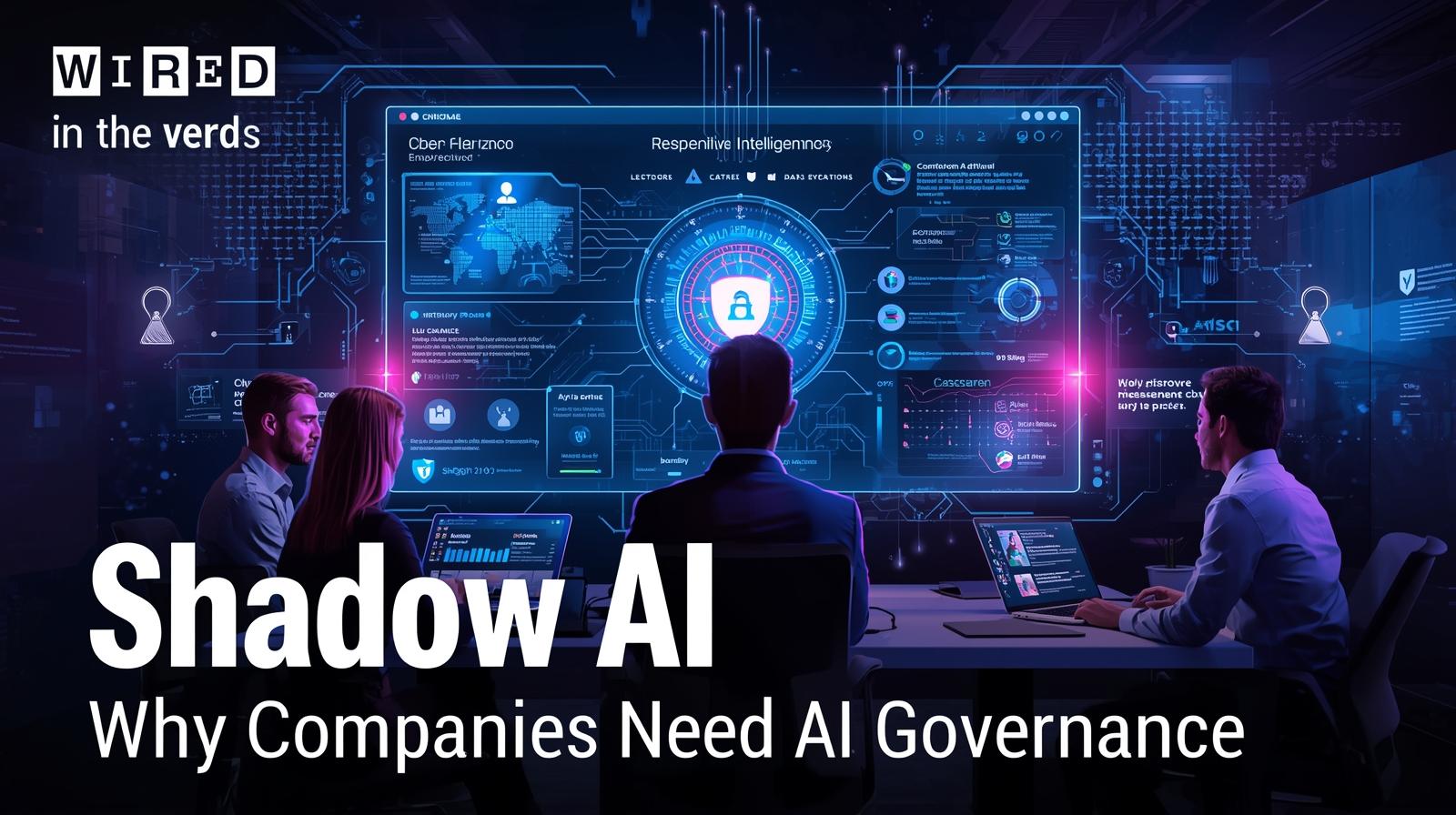
Shadow AI refers to the use of artificial intelligence tools inside organizations without approval from IT or security teams. Employees may use public AI services to summarize documents, generate code, or draft reports—often without realizing the potential security implications.
For companies handling sensitive information, this trend is raising serious questions about data leakage, compliance, and corporate security.
What Shadow AI Means
Shadow AI is similar to the concept of Shadow IT, where employees use unauthorized software or cloud services without the knowledge of their organization’s IT department.
In the case of Shadow AI, employees may access public AI tools such as ChatGPT, Google Gemini, Microsoft Copilot, Claude, or other AI assistants to assist with their work tasks.
These tools may be used to:
- Summarize internal reports
- Analyze datasets
- Generate software code
- Draft business communications
- Translate documents
- Create presentations
- Research topics
- Write email responses
While these activities may improve productivity, they can also introduce security risks if sensitive information is shared with external AI services.
Why Companies Are Worried About Shadow AI
Organizations are increasingly concerned about the security implications of unauthorized AI usage.
Several key risks are driving these concerns.
Confidential Data Leakage
Employees sometimes paste internal information into AI tools to receive assistance.
Examples may include:
- Internal documents and strategy papers
- Source code and proprietary algorithms
- Financial data and forecasts
- Customer information and PII
- Legal documents
- Trade secrets
- Employee records
If the AI service stores prompts or uses them to improve models, sensitive information could potentially be exposed.
Prompt Storage and Data Retention
Many AI services store prompts or interactions for system improvement, logging, or debugging.
This means the data entered by employees may be stored on external servers outside the organization’s control.
For companies operating under strict regulatory requirements, this can create compliance challenges with frameworks such as:
- GDPR (EU)
- CCPA/CPRA (California)
- HIPAA (Healthcare)
- PCI DSS (Payment data)
- SOX (Financial reporting)
- Industry-specific regulations
Model Training Risks
In some cases, user prompts may be used to help train or refine AI models.
Organizations worry that proprietary information could unintentionally influence model outputs or become part of training datasets.
Although many AI providers offer enterprise controls with data protection commitments, unauthorized usage bypasses these safeguards.
Intellectual Property Exposure
When employees paste proprietary code, product designs, or confidential strategies into public AI tools, they may be exposing intellectual property.
This could potentially:
- Weaken competitive advantage
- Enable competitors to benefit
- Complicate patent filings
- Reduce trade secret protection
Compliance Violations
Many industries have strict rules about data handling.
Unauthorized AI usage could cause organizations to violate:
- Data protection regulations
- Client confidentiality agreements
- Industry compliance requirements
- Contractual obligations with partners
Lack of Visibility
Security teams cannot protect what they cannot see.
Shadow AI operates outside normal monitoring and approval processes, creating blind spots in corporate security.
Real Examples of Shadow AI Behavior
Security teams have reported numerous cases where employees unintentionally introduced risks by using AI tools without guidance.
Software Development
Example: A developer pastes internal source code into a public AI assistant to debug an error or generate documentation.
Risk: Proprietary code may be stored on external servers or used for model training.
Marketing and Strategy
Example: A marketing manager uploads confidential campaign strategy documents to an AI summarization tool.
Risk: Future product launches or competitive strategies could be exposed.
Human Resources
Example: An HR professional asks an AI tool to draft a performance review or analyze employee feedback.
Risk: Personal employee data may be processed outside approved systems.
Finance
Example: A financial analyst uploads quarterly projections to an AI tool for analysis.
Risk: Sensitive financial data could be exposed before public release.
Legal
Example: A legal assistant pastes contract language into an AI tool for review or simplification.
Risk: Privileged legal information may lose protection.
In many cases, employees were simply trying to work more efficiently and did not realize the security implications.
Why Shadow AI Is Growing So Quickly
Several factors are driving the rapid growth of Shadow AI.
Easy Access to AI Tools
Many AI platforms are freely available and require only a web browser to access.
This makes it easy for employees to adopt AI tools without involving IT departments.
Productivity Pressure
Employees often face pressure to complete tasks quickly.
AI tools promise faster workflows, which can encourage unofficial adoption.
Lack of Clear Policies
Many organizations are still developing policies around AI usage.
Without clear guidance, employees may experiment with AI tools without understanding potential risks.
Generational Shifts
Younger employees who grew up with AI tools may assume their use is normal and acceptable in any context.
Vendor Marketing
AI companies actively promote their tools to individual users, encouraging direct adoption.
IT Bottlenecks
Traditional IT approval processes may be too slow for employees seeking immediate productivity gains.
The Scale of the Problem
Recent surveys of enterprise security professionals have revealed concerning trends:
- 70%+ of employees admit to using AI tools not approved by their organization
- 50%+ have pasted corporate data into public AI tools
- 30%+ have uploaded sensitive documents to AI platforms
- Most organizations lack complete visibility into AI usage
The problem appears to be growing as AI tools become more capable and accessible.
How Organizations Are Responding
Companies are beginning to develop strategies to manage the risks associated with Shadow AI.
Establishing AI Usage Policies
Many organizations are introducing formal guidelines that explain how AI tools can be used safely.
These policies often include:
- Restrictions on sharing sensitive data
- Approved AI platforms and tools
- Guidance on responsible usage
- Data classification requirements
- Reporting procedures for AI use
- Consequences for policy violations
Clear policies help employees understand what is acceptable.
Deploying Internal AI Tools
Some companies are building or adopting enterprise AI systems that operate within controlled environments.
These internal tools allow employees to use AI capabilities without exposing sensitive information to external services.
Options include:
- Private instances of AI models
- Enterprise agreements with AI providers (with data protection)
- Self-hosted open-source models
- AI gateways with security controls
- Integration with existing collaboration tools
Monitoring AI Traffic
Security teams may monitor network traffic to detect unauthorized access to AI platforms.
This helps organizations identify Shadow AI usage and respond accordingly.
Detection methods include:
- Network traffic analysis
- DNS monitoring
- Proxy logs
- Endpoint detection
- Cloud access security brokers (CASB)
However, monitoring alone is not enough—education and clear policies are also essential.
Employee Training and Awareness
Organizations are investing in training programs to help employees understand:
- The risks of sharing sensitive data with AI tools
- How to identify approved AI platforms
- When and how AI can be used safely
- How to report AI usage
- The importance of data classification
Technical Controls
Some organizations implement technical controls such as:
- Blocking access to unauthorized AI websites
- Data loss prevention (DLP) rules for AI platforms
- Browser extensions that warn about data sharing
- Endpoint controls that prevent pasting into certain sites
Data Classification Programs
Helping employees understand what information is sensitive is essential.
Data classification programs label information by sensitivity, making it easier for employees to know what should not be shared.
Balancing Security and Innovation
One of the challenges in addressing Shadow AI is balancing security concerns with the desire for innovation.
The Productivity Case for AI
AI tools offer genuine productivity benefits:
- Faster document drafting
- Improved code quality
- Better data analysis
- Enhanced research capabilities
- Reduced repetitive work
Organizations that completely block AI access may put themselves at a competitive disadvantage.
The Security Case for Oversight
However, uncontrolled AI usage creates real risks:
- Data leakage
- Compliance violations
- IP exposure
- Legal liability
- Reputational damage
The Balanced Approach
The most effective strategies combine:
- Clear policies that explain what is allowed
- Secure alternatives that meet employee needs
- Education about risks and responsibilities
- Monitoring to detect violations
- Enforcement when necessary
The Future of AI Governance in the Workplace
As AI adoption continues to accelerate, organizations will likely need stronger governance frameworks.
Experts predict that companies will increasingly treat AI tools similarly to other critical technologies—requiring oversight, security reviews, and compliance controls.
Emerging Best Practices
AI Inventory: Organizations will maintain lists of approved AI tools and track usage.
Risk Assessment: AI tools will be evaluated before approval based on security, privacy, and compliance.
Data Protection: Enterprise AI deployments will include encryption, access controls, and audit logging.
Employee Guidelines: Clear, accessible policies will help employees make good decisions.
Training Programs: Regular training will keep AI safety top of mind.
Technical Controls: DLP and monitoring tools will help prevent data leakage.
Incident Response: Plans will address AI-related security incidents.
The Role of AI Vendors
AI providers are responding to enterprise concerns by offering:
- Enterprise-grade security features
- Data protection commitments
- Compliance certifications
- Administrative controls
- Audit capabilities
Organizations should evaluate these offerings when selecting approved AI tools.
What Companies Should Do Now
For Security Leaders
- Assess current AI usage through surveys, monitoring, and interviews
- Develop clear policies that address Shadow AI risks
- Provide secure alternatives that meet employee needs
- Implement technical controls to protect sensitive data
- Train employees on responsible AI use
- Monitor for violations and respond appropriately
- Review and update policies as AI evolves
For IT Leaders
- Understand what AI tools employees need for their work
- Evaluate enterprise AI platforms that meet security requirements
- Integrate AI tools with existing systems where possible
- Provide guidance on approved tools and configurations
- Support employees in using AI productively and safely
For Business Leaders
- Recognize Shadow AI as a legitimate business risk
- Support security and IT in addressing the issue
- Communicate expectations about AI use
- Model responsible behavior with AI tools
- Invest in secure AI capabilities for the organization
For Employees
- Understand your organization’s AI policies
- Avoid sharing sensitive information with public AI tools
- Use approved tools when available
- Ask questions if unsure about what’s allowed
- Report concerns about potential data exposure
Conclusion
Shadow AI highlights a growing tension between innovation and security.
Employees are eager to use AI tools to improve productivity, but unauthorized use can introduce significant risks related to data leakage, compliance, and intellectual property protection.
Organizations that proactively address these challenges—through policies, training, and secure AI tools—will be better positioned to benefit from AI while minimizing potential security threats.
The solution is not to block all AI usage, but to create an environment where employees can use AI productively and safely.
Understanding Shadow AI is an important step toward building safer and more responsible AI adoption in the workplace.
🤖 Manage Shadow AI risks in your organization. Download our “Shadow AI Risk Assessment Toolkit” for security and IT teams.
Related Resources
Internal Cyvack Guides
- Hackers Are Using AI to Automate Cyber Attacks — Why the Threat Is Growing Faster
- Prompt Injection Attacks Are the New AI Security Threat — Here’s How They Work and How to Stop Them
- How Hackers Jailbreak AI Models — And Why It’s So Hard to Stop
- Hackers Are Poisoning AI Training Data — The Hidden Threat to AI Systems
- Your Browser Autofill Could Be Leaking Personal Data — The Hidden Security Risk Most Users Ignore
Enterprise AI Security Resources
Industry Reports
- Gartner: Managing Shadow AI in the Enterprise
- NIST AI Risk Management Framework
- CSA AI Security Guidance
- ISACA AI Audit Programs
Vendor Security Information
- OpenAI Enterprise Security
- Microsoft Copilot Security
- Google Gemini for Workspace Security
- Anthropic Claude Enterprise
Policy and Governance Templates
AI Usage Policies
- Sample AI Acceptable Use Policy
- Data Classification Guidelines for AI
- AI Risk Assessment Template
- Vendor Security Questionnaire for AI Tools
Training Materials
- Employee AI Security Awareness Training
- Shadow AI Risk Presentation for Executives
- AI Safety Quick Reference Guide
- Interactive AI Scenarios for Training
Technical Controls
Data Loss Prevention
- DLP Rules for AI Platforms
- Content Inspection for AI Traffic
- Browser Controls for AI Sites
- Endpoint Protection for AI Tools
Monitoring Solutions
- AI Traffic Detection Tools
- CASB for AI Services
- Network Monitoring for Shadow IT
- Log Analysis for AI Usage
Industry Examples
Case Studies
- Financial Services: AI Governance Implementation
- Healthcare: Protecting Patient Data from AI
- Technology: Balancing Innovation and Security
- Manufacturing: IP Protection in the AI Era
Lessons Learned
- Real Shadow AI Incidents
- Successful Policy Implementations
- Common Pitfalls to Avoid
- Measuring Program Effectiveness
Regulatory Considerations
Data Protection Laws
- GDPR and AI Processing
- CCPA/CPRA AI Implications
- HIPAA and AI Tools
- Cross-Border Data Flows with AI
Industry Regulations
- SEC Disclosure Requirements
- FINRA Guidance on AI
- FDA AI in Medical Devices
- EU AI Act Requirements
Frequently Asked Questions
Q: Is Shadow AI really that common?
Yes. Surveys consistently show that a majority of employees use unauthorized AI tools, often without their IT department’s knowledge.
Q: Can’t we just block access to AI websites?
Blocking may reduce risk but can also hurt productivity and drive employees to find other workarounds. A balanced approach is usually more effective.
Q: Are enterprise AI versions safe?
Enterprise offerings typically include stronger data protection commitments, but organizations should still review security practices before adoption.
Q: What should I do if I find Shadow AI in my organization?
First, understand why employees are using unauthorized tools—they may be trying to solve real productivity problems. Then develop a strategy that addresses both security and business needs.
Q: Do AI providers use my data for training?
Policies vary by provider and by service tier. Enterprise agreements often include commitments not to use customer data for training, but consumer versions may have different terms.
Q: How do I know if an AI tool is approved?
Check with your IT or security team. Many organizations maintain lists of approved tools and services.
Q: What’s the biggest risk from Shadow AI?
Data leakage is typically the top concern, especially when sensitive or regulated information is involved.
Glossary of Terms
- Shadow AI: Unauthorized use of AI tools within an organization
- Shadow IT: Unauthorized use of software, hardware, or cloud services
- Data Leakage: Unauthorized transfer of data outside the organization
- DLP (Data Loss Prevention): Systems that detect and prevent data breaches
- CASB (Cloud Access Security Broker): Tools that monitor cloud service usage
- Enterprise AI: AI tools with security, compliance, and management features for organizations
- Prompt Injection: Attacks that manipulate AI systems through crafted inputs
- Model Training: The process of teaching AI systems using data