Introduction: The Digital Battlefield Comes of Age
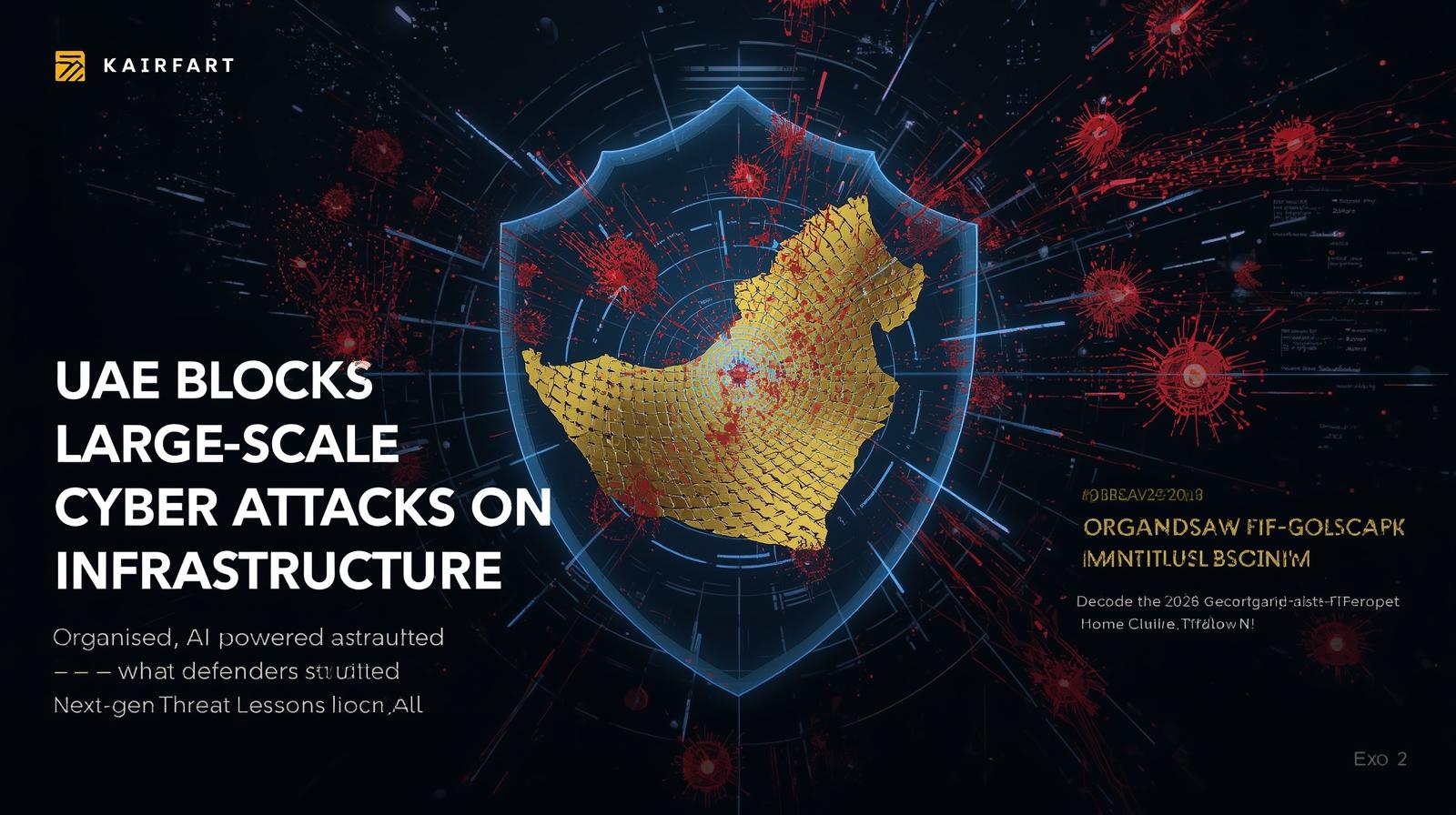
In a rare confirmed national cyber defence success, the United Arab Emirates has publicly acknowledged that its national cybersecurity apparatus foiled organised cyberattacks targeting the country’s digital infrastructure and vital sectors — and that artificial intelligence technologies were used by the attackers to develop offensive tools. The announcement, carried by the state news agency and widely reported from Reuters, signals a serious escalation in the cyber threat landscape where attackers are increasingly harnessing AI to augment traditional intrusion methods such as phishing and ransomware.
This defensive victory is significant not because cyberattacks are new, but because AI-enhanced operations represent the next evolution in cyber warfare, requiring defenders to match AI speed and sophistication or risk critical infrastructure compromise.
The AI Offensive Playbook: How Attackers Weaponised Automation
Although official details are limited, the UAE government’s announcement provides a glimpse of the multi-vector assault and how AI may have been leveraged within it.
Automated Reconnaissance and Exploit Discovery
One of the easiest ways attackers gain initial access is by scanning and probing systems for vulnerabilities. AI-based tools can dramatically accelerate reconnaissance, identifying obscure weaknesses far faster than traditional tools. By automating both mapping and exploit suggestion, such capabilities reduce the time between target identification and intrusion — a dangerous development for defenders.
Ransomware + AI Synthesis
The thwarted attacks reportedly included network infiltration and ransomware deployment attempts. Modern ransomware families are integrating AI components to tailor payload behaviour, bypass detection engines, and adapt dynamically to defensive environments. While the UAE’s announcement didn’t name specific malware families, the involvement of AI in offensive tool generation suggests attackers were using algorithmically enhanced payloads to improve stealth and effectiveness.
AI-Driven Phishing Campaigns
Systematic phishing campaigns were also part of the attack vector mix, according to official reports. AI can craft highly personalised, contextually believable phishing lures in bulk, improving success rates and magnifying human-targeted risk — particularly against staff with elevated access to critical systems.
Sectoral Crosshairs: Why Utilities, Government & Vital Sectors Were Targeted
Targeting Critical Infrastructure
The announcement described attacks on digital infrastructure and vital sectors, implying possible targeting of:
- Utilities and energy systems — infrastructure where disruption can cascade into physical and economic damage.
- Government platforms — repositories of public data and services that can be exploited to undermine trust or impact governance.
- Public-facing digital services — portals and APIs that interface with citizens and private sector partners.
While specifics weren’t disclosed, the emphasis on “vital sectors” and continuity underscores that both operational technology (OT) environments and IT platforms were likely under scrutiny.
Defence in Depth: How the UAE Succeeded
AI-Enhanced Defensive Parity
The UAE Cybersecurity Council credited its national cybersecurity system with operating around the clock to detect and respond to the attacks before they could achieve any disruption. Integration of AI-driven defensive analytics and automated detection systems is likely a key factor — highlighting how machine learning and behavioural analytics now underpin modern defensive operations.
AI systems can spot anomalies across massive traffic volumes and evolving TTPs (tactics, techniques, and procedures) faster than traditional signature-based tools — a capability that defenders are increasingly relying upon.
Collaboration & Shared Intelligence
The UAE’s response reportedly leveraged cooperation with international partners and specialised organisations to strengthen real-time defensive posture and accelerate recovery capability. Critical infrastructure operators should note that threat intelligence sharing with peers and national authorities is now a central element of effective defence against sophisticated threats.
The Evolving Threat Landscape: AI-Powered Attack Vectors
AI-Augmented Phishing: Beyond Grammar and Templates
Traditional phishing detection often relies on identifying poor grammar or generic templates. AI-generated phishing content eliminates these tells:
- Perfect linguistic fluency in multiple languages
- Contextual awareness using OSINT data
- Personalised lures referencing recent events or relationships
- Automated A/B testing to optimise success rates
Autonomous Attack Orchestration
Future attacks may involve fully autonomous compromise chains:
- AI reconnaissance identifies vulnerable targets
- Automated exploit selection matches vulnerabilities to available tools
- Adaptive payload generation creates customised malware variants
- Self-tuning evasion modifies behaviour based on defensive responses
Deepfake Social Engineering
The integration of deepfake audio and video into attacks is no longer theoretical:
- Voice cloning for vishing (voice phishing) attacks
- Deepfake video for executive impersonation
- Synthetic identity creation for trust fabrication
Critical Infrastructure: The Ultimate Prize
Why Critical Infrastructure Is the Target
Attackers target critical infrastructure because:
- Disruption potential — cascading physical and economic impacts
- Ransom leverage — willingness to pay to restore services
- Data sensitivity — personal, financial, and operational data
- Geopolitical signalling — state-sponsored attacks for strategic advantage
OT vs. IT: Converging Risk
Operational Technology (OT) environments face unique challenges:
- Legacy systems with limited security capabilities
- Air-gapped assumptions eroding with connectivity
- Safety implications beyond data loss
- Limited visibility for traditional security tools
The convergence of IT and OT means attacks originating in corporate networks can pivot to industrial control systems—a nightmare scenario this UAE attack appears to have prevented.
Global Implications: What This Means for Defenders Worldwide
The Attribution Challenge
AI-powered attacks complicate attribution:
- Style mimicry — AI can emulate adversary TTPs
- False flags — deliberate misattribution through tooling
- Proxy execution — compromised infrastructure obscures origin
Normalisation of AI-Enhanced Threats
This incident confirms that AI-enhanced attacks are no longer theoretical—they are operational realities. Defenders must assume:
- All phishing attempts may be AI-generated
- Malware variants will adapt in real-time
- Reconnaissance will be automated and comprehensive
- Attack speeds will exceed human response capabilities
Regulatory and Compliance Implications
Expect regulatory responses:
- Mandatory AI defence capabilities for critical infrastructure
- Enhanced reporting requirements for AI-powered incidents
- International cooperation frameworks for attribution
- Cyber insurance adjustments for AI risk
The Defensive Imperative: Building AI-Ready Security Operations
AI-Native Security Tools
Legacy security tools are insufficient against AI-powered adversaries. Organisations must adopt:
- AI-enhanced SIEM/SOAR platforms for automated response
- Behavioural analytics for anomaly detection
- Machine learning-based EDR/XDR for threat hunting
- Automated deception technologies to misdirect attackers
Threat Intelligence Transformation
Intelligence functions must evolve:
- Predictive threat modelling using AI
- Automated indicator ingestion and correlation
- Cross-sector intelligence sharing platforms
- Real-time TTP mapping to defensive controls
Workforce Development
Security teams need new capabilities:
- AI security literacy across all roles
- Data science integration in security operations
- Adversarial simulation with AI tools
- Continuous training on evolving threats
The UAE Model: Lessons in National Cyber Resilience
Centralised Coordination
The UAE’s success highlights the value of:
- Unified national cybersecurity authority
- Clear incident response protocols
- Public-private partnership frameworks
- International intelligence sharing relationships
Sector-Specific Requirements
Different sectors require tailored approaches:
| Sector | Key Considerations | Defence Priorities |
|---|---|---|
| Energy | Physical safety, continuity | OT monitoring, air-gap protection |
| Government | Service delivery, public trust | Identity protection, fraud detection |
| Finance | Transaction integrity, customer data | Real-time fraud prevention, API security |
| Healthcare | Patient safety, data privacy | Device security, access controls |
Investment in National Capabilities
The UAE has invested significantly in:
- National cybersecurity centres
- Workforce development programs
- Research and innovation partnerships
- International collaboration frameworks
Immediate Actions for Security Leaders
Within 30 Days
- Conduct AI threat exposure assessment
- Review phishing defence capabilities against AI-generated content
- Evaluate EDR/XDR tooling for AI-native features
- Update incident response playbooks for AI-powered attacks
Within 90 Days
- Implement behavioural analytics for anomaly detection
- Establish threat intelligence sharing relationships
- Deploy automated response capabilities for common threats
- Conduct red team exercises simulating AI adversaries
Within 12 Months
- Achieve AI-native security operations maturity
- Integrate predictive threat modelling into planning
- Develop AI security workforce capabilities
- Align with emerging regulatory requirements
Conclusion: The New Normal for Cyber Defence
The UAE’s successful defence against AI-powered cyber attacks — confirmed by Reuters via the state news agency — represents both a strategic victory and an urgent wake-up call for defenders worldwide.
Advanced attackers are now integrating AI into reconnaissance, phishing, and payload delivery — meaning the next major incident could succeed just by being faster or more subtle. Effective preparation will require parity in defensive AI capabilities, investments in automation, and robust intelligence sharing.
The UAE incident confirms what security professionals have feared: AI-powered attacks are here. The only question is whether your organisation is prepared to face them.
🛡️ Is your organisation ready for AI-powered attacks? Download our free AI Defence Readiness Assessment to evaluate your critical infrastructure cyber posture and align it with the evolving threat landscape.
Related Resources
Internal Cyvack Guides
- Critical Infrastructure Cyberattacks in Europe — Lessons from Recent Incidents
- Enterprise Cybersecurity Concerns About AI Agent Risk — Survey Analysis
- AI Runtime Protection: The Next Frontier in Critical Infrastructure Security
Official Sources
UAE Government
- UAE Cybersecurity Council Official Announcements
- UAE News Agency Report
- UAE National Cyber Security Strategy
International Coverage
- Reuters: UAE foils cyber attacks
- Associated Press: UAE thwarts AI-powered cyber campaign
- Bloomberg: Gulf states face escalating cyber threats
Threat Intelligence
AI Attack Analysis
Critical Infrastructure Threats
- CISA Critical Infrastructure Security
- NCSC Cyber Assessment Framework
- ENISA Threat Landscape for Critical Infrastructure
Technical Resources
AI-Native Defence
- AI-Enhanced SIEM/SOAR Implementation Guides
- Machine Learning for Anomaly Detection
- Behavioural Analytics Deployment Patterns
- Automated Response Orchestration Frameworks
OT Security
- Purdue Model Security Controls
- ICS/SCADA Protection Strategies
- OT Network Segmentation Best Practices
- Legacy System Risk Mitigation
Sector-Specific Guidance
Energy Sector
- Electric Grid Cybersecurity Framework
- Oil and Gas Industry Security Standards
- Renewable Energy System Protection
- Smart Grid Vulnerability Management
Government Services
- Citizen Portal Security Requirements
- Identity and Access Management Best Practices
- Public Trust and Service Continuity
- Cross-Agency Coordination Protocols
Financial Services
- Real-Time Fraud Detection Systems
- API Security for Open Banking
- Payment System Protection
- Customer Data Privacy Controls
Healthcare
- Medical Device Security Requirements
- Patient Data Protection Standards
- Telehealth Platform Security
- Emergency Service Continuity
Regulatory and Compliance
International Frameworks
- NIST Cybersecurity Framework (CSF) 2.0
- ISO/IEC 27001 Critical Infrastructure Extension
- GDPR Implications for Incident Response
- Sector-Specific Regulatory Requirements
National Strategies
- US Critical Infrastructure Security Directives
- EU NIS2 Directive Requirements
- UK National Cyber Strategy
- GCC Regional Cooperation Frameworks
Incident Response
Playbooks and Templates
- Critical Infrastructure Incident Response Playbook
- OT Compromise Response Procedures
- Ransomware Containment and Recovery
- Public Communication Templates
Forensics and Investigation
- AI Attack Attribution Methods
- OT Forensic Collection Techniques
- Chain of Custody for Critical Systems
- Evidence Preservation Protocols
Investment and Planning
Budget Allocation
- AI Security Investment Prioritisation
- ROI Models for Defensive AI
- Capability Maturity Assessment
- Risk-Based Resource Allocation
Procurement Guidance
- AI-Native Security Tool Evaluation
- Vendor Security Assessment Criteria
- Service Level Agreement Requirements
- Third-Party Risk Management
International Cooperation
Intelligence Sharing
- ISAC/ISAO Participation Benefits
- Cross-Border Information Sharing Agreements
- Public-Private Partnership Models
- Threat Intelligence Platform Integration
Capacity Building
- International Training Programs
- Technical Assistance Frameworks
- Knowledge Transfer Initiatives
- Joint Exercise Programs
Future Outlook
Emerging Threats
- Autonomous AI Attack Systems
- Quantum Computing Impact on Security
- 5G/6G Network Vulnerabilities
- Space-Based Infrastructure Risks
Defensive Evolution
- AI vs. AI Arms Race Dynamics
- International Norm Development
- Insurance Market Adaptations
- Workforce Transformation Trends
Training and Certification
Professional Development
- SANS ICS Security Curriculum
- GIAC Critical Infrastructure Protection
- CISSP-ISSAP Architecture Focus
- Certified AI Security Professional Programs
Executive Education
- Board-Level Cyber Risk Governance
- Critical Infrastructure Leadership
- Crisis Management Simulation
- Strategic Investment Planning