EDUCATIONAL PURPOSE DISCLAIMER: This article discusses cybersecurity topics strictly for educational and awareness purposes. We do not encourage illegal activity.
Introduction: An Authoritative Mandate on AI-Driven Risk
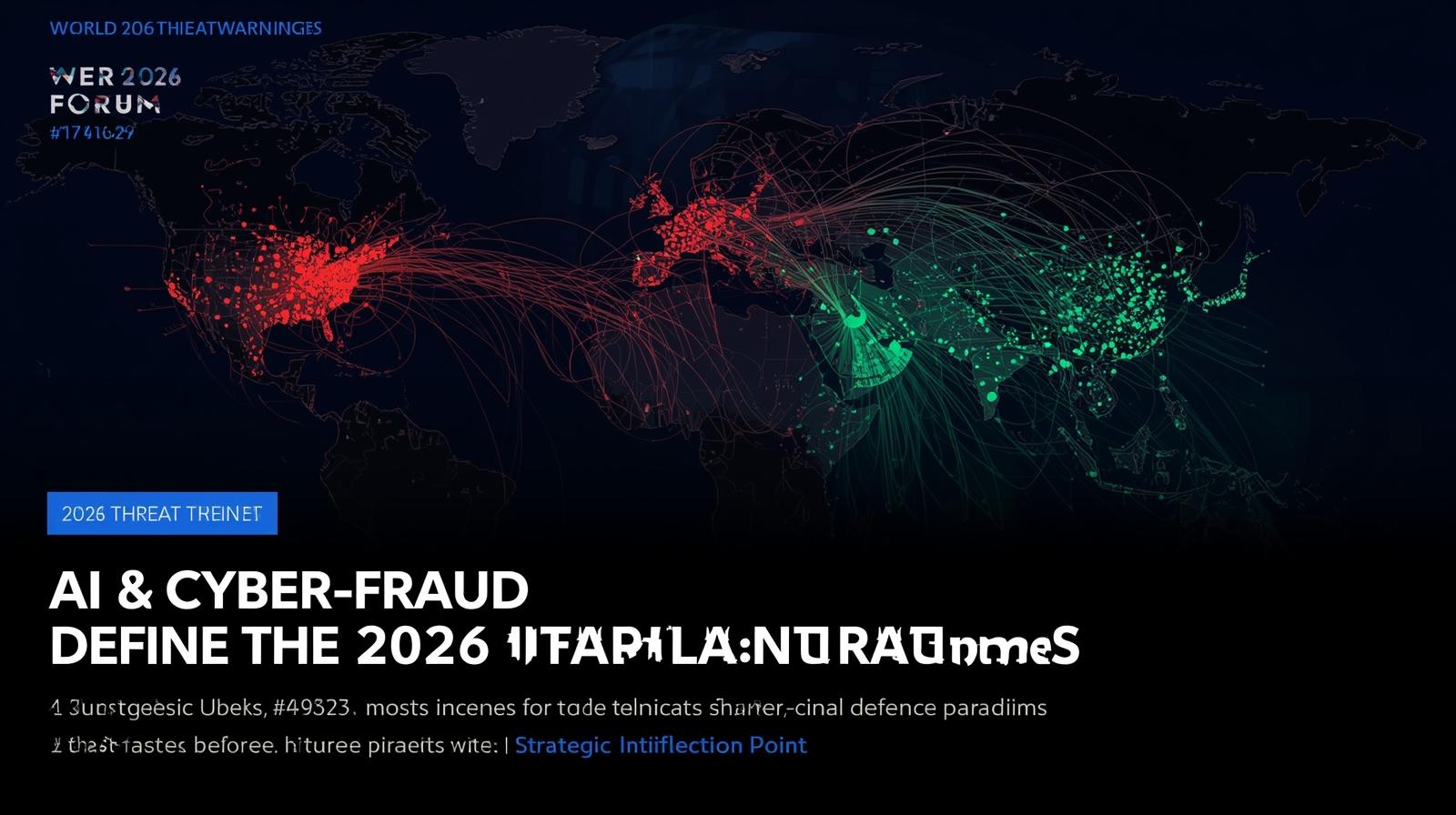
The World Economic Forum’s Global Cybersecurity Outlook 2026—a landmark assessment informed by input from hundreds of global security leaders, CEOs, and government executives—paints a stark picture of the cyber threat landscape as we enter 2026. According to the WEF and its partners, AI-related vulnerabilities have surged to become the fastest-growing category of cyber risk, underscoring how artificial intelligence is reshaping the offense-defense balance historically dominated by traditional threats.
This development elevates AI from a tactical consideration to a strategic threat multiplier—one that redefines what corporate and national defense postures must protect. Behind this shift lies an unprecedented acceleration not just of attacks, but of the scale, automation, and creativity with which they can be carried out.
The AI Arms Race: Offense vs. Defense at Machine Speed
AI Supercharges Cyber Offense
The WEF’s 2026 outlook is unequivocal: 94% of surveyed leaders believe AI will be the most consequential force shaping cybersecurity in the year ahead.
Artificial intelligence lowers the barrier to entry for complex attacks and multiplies impact:
- Hyper-personalized phishing at scale: AI can craft highly credible, individualised lures that evade traditional filters and social engineering defenses.
- Automated vulnerability discovery: AI accelerates offensive reconnaissance, making exploit development faster and more precise.
- Polymorphic malware: Self-modifying malicious code can evade signature-based detection and propagate unpredictably.
- Deepfakes and synthetic media: Beyond impersonation, these tools enable fraud, misinformation, and psychological manipulation at scale.
The result is a widened and dynamic attack surface—one that traditional cybersecurity controls were not designed to contend with.
The Defensive Imperative: AI vs. AI
AI isn’t only empowering attackers. Defenders are now compelled to build AI-augmented tools capable of matching adversarial speed and sophistication:
- AI-driven behavioral analytics (UEBA): Helps detect anomalies in real time.
- AI-powered threat hunting: Rapidly identifies and contextualizes emerging threats.
- Automated SOAR workflows: Orchestrates responses across environments at machine scale.
Yet the report also underscores a critical gap: security governance and human expertise are lagging behind the pace of AI adoption and the risks it introduces.
From IT Cost to Business Risk: The Rise of Cyber-Enabled Fraud
Beyond Data Theft
A defining shift highlighted by the WEF is that cyber-enabled fraud is now one of the most pervasive global threats, overtaking ransomware in boardroom priority.
This reflects how AI is reshaping cybercrime motives:
- Business Email Compromise (BEC) 2.0: AI crafts convincing impersonations that bypass traditional safeguards.
- Invoice and payment fraud: Automated scams targeting finance workflows with precision.
- Synthetic identity theft: AI-generated personas used to open accounts, launder funds, or evade controls.
- Market manipulation via deepfakes: AI-generated content influences investor sentiment and financial markets.
Importantly, these forms of fraud hit profit & loss directly, shifting cyber risk from a technical concern to a core business continuity and financial control issue.
According to the WEF survey, 73% of respondents reported that they or someone in their network was personally affected by cyber-enabled fraud in 2025.
Strategic Shifts and Preparing for the AI Era
Integrating Security into Business Strategy
The WEF makes clear that cybersecurity can no longer be siloed within IT teams; it must be woven into enterprise strategy and AI governance frameworks. This includes:
- AI-specific threat modelling: Evaluating how models can be misused or manipulated.
- Red teaming AI systems: Stress-testing for realistic threat scenarios.
- Security-by-design: Embedding safeguards throughout development lifecycles.
Organizations that fail to adopt these measures risk persistent blind spots as adversaries continue to innovate.
Government & Policy Priorities
At a national and international level, the report calls for:
- Public-private threat intelligence sharing to stay ahead of fast-moving AI risks.
- International norms for AI use in cyber operations, reducing escalation and ambiguity.
- Investment in national AI security research and workforce development, addressing widening capability gaps.
Geopolitics also looms large: 64% of organizations now explicitly factor geopolitically motivated cyberattacks into their risk strategies. Yet confidence in national preparedness is slipping, particularly in emerging economies.
Regional Preparedness Disparities
The WEF survey highlights significant disparities across regions and sectors:
- Mature economies often have advanced AI tools but still face skills shortages and governance bottlenecks.
- Developing regions grapple with both technology and talent gaps, making them potentially attractive targets for automated attacks and manipulation.
- Supply chain opacity and third-party risks continue to loom large, with 65% of large companies citing them as a core resilience challenge.
This uneven landscape underscores that collective resilience is only as strong as its weakest links.
Conclusion: Building Resilience in the AI Era
The WEF cybersecurity outlook 2026 delivers a strategic warning: AI has irrevocably changed the cybersecurity game. AI-driven risks—from hyper-sophisticated attacks to pervasive cyber-enabled fraud—require a paradigm shift in how defenses are built and managed.
Success will be defined not by preventing all breaches, but by organizational and systemic resilience—cultivated through:
- AI-augmented defense
- Cross-sector collaboration
- AI governance frameworks
- Global standards and shared threat intelligence
Ignoring this shift is no longer an option; it’s a profound strategic risk in a landscape where threats evolve as fast as technology itself.
📊 Download our executive summary of the WEF 2026 Cybersecurity Outlook’s key action items to guide your organization’s next steps.
Related Resources
Internal Cyvack Guides
- Trend Micro Warns 2026 Will Fully Industrialize Cybercrime — What Enterprises Must Prepare For
- FBI Warns of Increasing AI-Assisted Fraud & Impersonation Schemes — Detection and Response
- The 2026 AI Reality Check: Why the “AI Pragmatism” Narrative Hasn’t Arrived Yet
Official WEF Reports & Resources
- World Economic Forum Global Cybersecurity Outlook 2026 — Official Report
- WEF Centre for Cybersecurity Overview Page
- WEF Press Release: Cyber-Enabled Fraud Is Now One of the Most Pervasive Global Threats
- WEF Global Risks Report 2026
Global Risk Analysis
- UN Office on Drugs and Crime: Cybercrime Trends
- Interpol Global Crime Trends Report
- EU Agency for Cybersecurity (ENISA) Threat Landscape
- CISA Cybersecurity Strategic Plan
AI-Specific Security Frameworks
- NIST AI Risk Management Framework (AI RMF)
- MITRE ATLAS (Adversarial Threat Landscape for AI Systems)
- OWASP Top 10 for Large Language Model Applications
- EU AI Act Security Requirements
Fraud Prevention Resources
AI-Enabled Fraud Detection
- Behavioral Analytics Platforms for Fraud Prevention
- AI-Powered Transaction Monitoring Systems
- Deepfake Detection and Authentication Tools
- Synthetic Identity Fraud Detection Solutions
Financial Controls
- Business Email Compromise (BEC) Protection Frameworks
- Invoice and Payment Fraud Prevention Systems
- Multi-Factor Authentication Best Practices
- Financial Transaction Verification Protocols
Organizational Governance
AI Governance Frameworks
- AI Risk Assessment Templates
- AI System Red Teaming Guidelines
- Security-by-Design Implementation Checklists
- AI Incident Response Plans
Workforce Development
- AI Security Training Programs
- Cyber-Enabled Fraud Awareness Training
- Executive Cybersecurity Education
- Cross-Functional Security Teams
International Collaboration
- Public-Private Partnership Models
- Cross-Border Threat Intelligence Sharing Platforms
- International Cyber Norms Development
- Global Incident Response Coordination
Regional Focus Resources
Developed Economies
- Advanced AI Security Implementation Guides
- Workforce Development and Retention Strategies
- Regulatory Compliance Frameworks
- Public-Private Collaboration Models
Developing Regions
- Technology Access and Implementation Support
- Capacity Building Programs
- Affordable Security Solutions
- International Partnership Opportunities
Supply Chain Security
- Third-Party Risk Management Frameworks
- Supply Chain Transparency Tools
- Vendor Security Assessment Templates
- Critical Dependency Mapping
Implementation Tools
- AI Threat Modeling Templates
- Cyber-Enabled Fraud Risk Assessment Tools
- Organizational Resilience Scorecards
- Governance Maturity Assessment Frameworks
Future Outlook Analysis
- Emerging AI Threat Vectors Research
- Quantum Computing Security Implications
- Next-Generation Fraud Techniques Analysis
-
Long-term Resilience Strategy Development
Need help implementing WEF cybersecurity recommendations? Contact Cyvack for AI security strategy, fraud prevention frameworks, and organizational resilience advisory.
