EDUCATIONAL PURPOSE DISCLAIMER: This article discusses cybersecurity topics strictly for educational and awareness purposes. We do not encourage illegal activity.
Introduction: The Child Safety Imperative Drives Policy Action
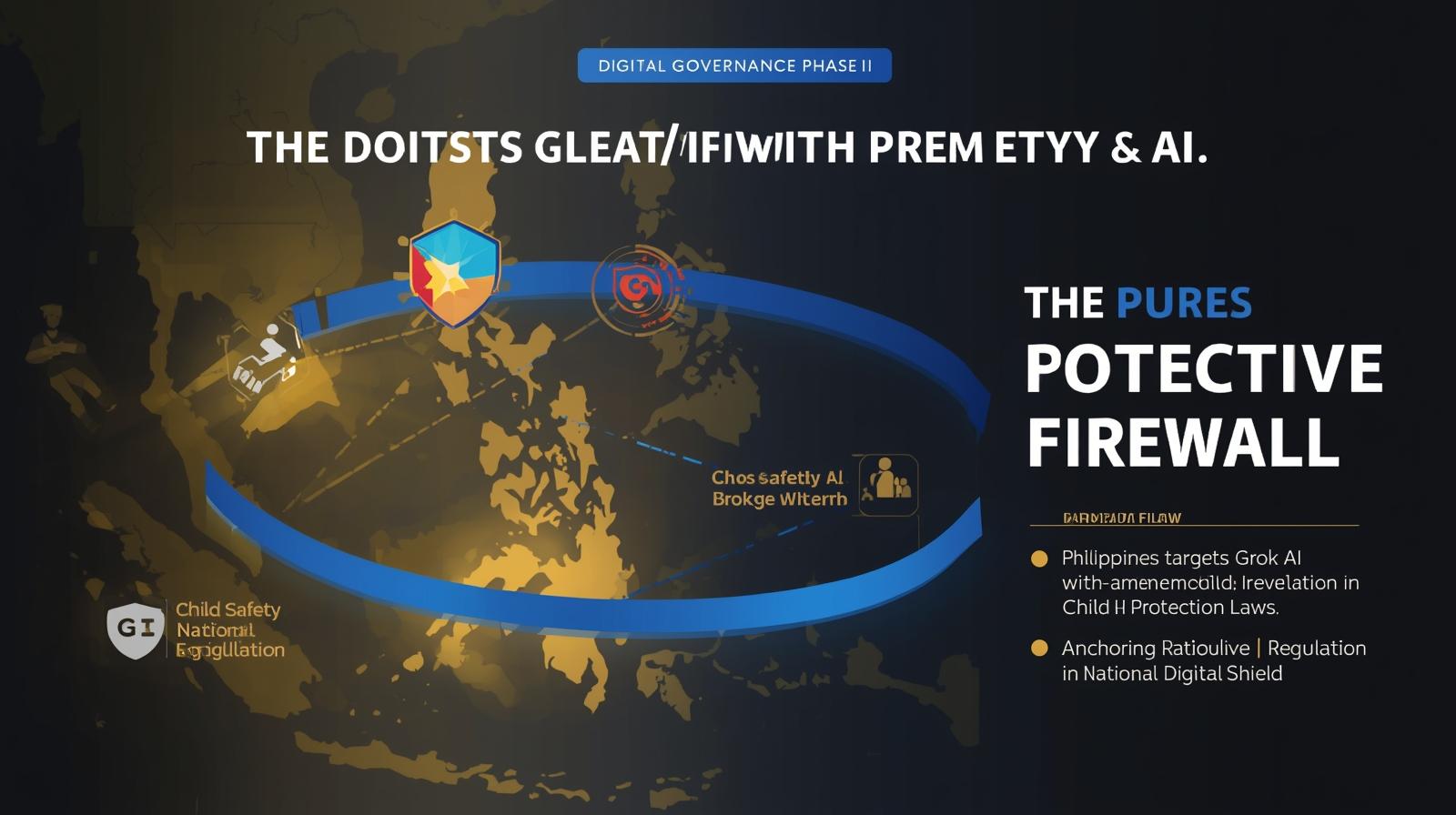
The Philippines is moving to block access to Elon Musk’s AI chatbot Grok after authorities flagged the platform’s potential to generate sexualized deepfake content that could pose risks to minors and online safety. Officials from the Department of Information and Communications Technology (DICT) and the Cybercrime Investigation and Coordinating Center (CICC) have directed the National Telecommunications Commission (NTC) to work with internet service providers to intermittently restrict the AI tool’s availability within the country over concerns related to online sexual abuse and exploitation of children (OSAEC).
This move frames the policy not as abstract content moderation, but as a child protection imperative embedded in local law and public welfare obligations—making it much harder for platforms to deflect or dilute the rationale.
The Legal Basis: Invoking Child Protection Laws in the Digital Age
Child Safety as a Compelling Legal Justification
Philippine officials have anchored their decision on existing sexual abuse and exploitation offenses, notably those encapsulated in laws like the Cybercrime Prevention Act of 2012 and provisions related to online sexual abuse or exploitation of children (OSAEC). The DICT specifically noted that the sexually explicit deepfake content generated by Grok falls under harmful digital content that warrants immediate blocking without needing prior permission from the platform.
Secretary Aguda stated that the government does not need to coordinate with Grok’s operators before initiating the block, given the nature of the content involved—a clear line drawn between moderation failures and legal restrictions aimed at protecting minors from abuse and exploitation.
Content Moderation Failure Narrative
The Philippines’ approach rests on the assertion that existing safeguards are inadequate. Even as xAI implements technical restrictions and limits on image editing and generation, government officials have indicated that these measures do not alter their approach to enforcement, emphasizing that cleaning up toxic AI-generated content is a national priority.
A Regional Trend: Southeast Asia’s Firm Hand on AI
Joining Neighbors in Restrictive Measures
The Philippines’ planned block comes amid a broader Southeast Asian response to harmful AI content. Indonesia was the first in the region to temporarily block Grok due to concerns it enabled pornographic deepfakes, including potentially exploitative content involving minors. Malaysia swiftly followed with measures aimed at legally restricting access to the tool over similar concerns.
This pattern highlights a regional governance philosophy that prioritizes social order and child safety over unrestricted platform access or free expression absolutes.
Distinct Legal Traditions Compared to the West
In contrast, Western regulators such as the EU (Digital Services Act and GDPR) and Canada (PIPEDA) tend to rely more on data protection, platform liability frameworks, and procedural safeguards when addressing harmful AI output. Southeast Asian nations, including the Philippines, are emphasizing substantive child protection laws and direct access controls, reflecting differing legal cultures and societal values in digital governance.
Implications for xAI, the AI Industry, and Users
For xAI and X Corp.
The child safety rationale presents a serious reputational and legal challenge for xAI. To reverse or mitigate the block, the company would likely need to demonstrate unprecedented, verifiable control over harmful outputs, particularly involving minors—an exceptionally high bar technically and operationally.
Even widespread technical restrictions implemented by xAI (such as limits on image editing and adult content controls) have been portrayed by officials as insufficient to address the full spectrum of risk under local law.
Setting a Global Precedent
By explicitly linking an AI access ban to child safety concerns, the Philippines may be providing a potent policy precedent. Other countries could adopt similar justifications—especially where legal frameworks already criminalize child exploitation and online abuse. This could expand the toolkit for national regulators far beyond traditional content moderation norms.
For Philippine Users and Advocates
While the rationale resonates strongly with child protection imperatives, digital rights advocates have long cautioned about the risk of sweeping blocks becoming a gateway to broader internet restrictions. Transparency in enforcement, well-defined legal thresholds, and clear appeal mechanisms will be critical to ensure that protections for children do not bleed into overbroad content restrictions that stifle legitimate expression.
Conclusion: The Unbeatable Justification
The Philippines’ decision to target Grok AI with a content block rooted in child safety concerns is a strategic regulatory maneuver that leverages one of society’s most powerful legal and moral rationales. By anchoring AI governance in child protection law, officials have stepped beyond generic content moderation debates into a domain where platforms are legally obligated to demonstrate deep, foolproof safeguards—or face exclusion.
This action signals to AI developers worldwide that failure to prevent egregious harms, particularly those affecting children, will not be tolerated. As Southeast Asia’s approach converges with global enforcement trends, countries will increasingly use child safety frameworks—not just privacy or platform liability laws—to govern AI in practice.
🌏 Subscribe to our APAC Tech Policy Monitor for updates on regional AI regulation and compliance strategies.
Related Resources
Internal Cyvack Guides
- Malaysia Temporarily Blocks Grok AI Over Explicit Image Generation
- Canada Expands Privacy Probe Into X & Grok AI Over Deepfakes
- India’s IT Ministry Slaps Notice on X Over AI Abuse on Grok
Philippine Legal Framework
- Republic Act No. 10175: Cybercrime Prevention Act of 2012
- Republic Act No. 9775: Anti-Child Pornography Act of 2009
- Republic Act No. 11648: Raising the Age of Statutory Rape
- DICT Administrative Orders and Memoranda
Official Government Statements
- Department of Information and Communications Technology (DICT) Press Releases
- Cybercrime Investigation and Coordinating Center (CICC) Advisories
- National Telecommunications Commission (NTC) Memoranda
- Philippine National Police Anti-Cybercrime Group
Regional Context
Southeast Asian Regulations
- Indonesia: Minister of Communication and Information Technology (Kominfo) Regulations
- Malaysia: Malaysian Communications and Multimedia Commission (MCMC) Directives
- Singapore: Infocomm Media Development Authority (IMDA) AI Governance Framework
- Thailand: Digital Economy and Society Ministry (DES) AI Guidelines
ASEAN Initiatives
- ASEAN Digital Masterplan 2025
- ASEAN Framework on Digital Data Governance
- ASEAN Agreement on Electronic Commerce
Child Protection Resources
International Frameworks
- UN Convention on the Rights of the Child (UNCRC)
- WeProtect Global Alliance Model National Response
- INTERPOL Crimes Against Children Unit
Technical Solutions
- AI Content Detection for Child Sexual Abuse Material (CSAM)
- Age Verification Technologies
- Digital Watermarking for Child Protection
- Reporting and Takedown Coordination Platforms
Industry Response Resources
AI Safety by Design
- Child-Safe AI Development Frameworks
- Red-Teaming Protocols for Harmful Content
- Age-Appropriate Design Implementation
- Cross-Cultural Safety Assessment Tools
Compliance Strategies
- Regional Content Moderation Adaptation Models
- Legal Risk Assessment for Southeast Asian Markets
- Government Engagement and Negotiation Frameworks
- Technical Restriction Implementation Guides
Comparative Analysis
Western vs. Southeast Asian Approaches
- Procedural vs. Substantive Regulation Comparison
- Data Protection vs. Content Control Philosophies
- Platform Liability vs. Government Control Models
- Legal Cultural Differences in Technology Governance
Advocacy and Digital Rights
- Digital Rights Coalition Philippines (DRCP) Positions
- Foundation for Media Alternatives (FMA) Research
- Internet Society Philippines Chapter Advocacy
- Balancing Child Protection and Digital Rights Frameworks
Technical Implementation
Blocking Mechanisms
- DNS and IP-Based Blocking Technologies
- Deep Packet Inspection for AI Traffic
- Application-Level Restriction Implementation
- Circumvention Detection and Prevention
Alternative Approaches
- Content Filtering vs. Complete Blocking
- Age-Gated Access Implementation
- Localized Moderation and Review Systems
- Transparency Reporting Requirements
Case Studies and Precedents
- Previous Philippine Internet Blocking Cases
- Regional AI Regulation Enforcement Examples
- Child Protection Law Application to Technology
- International Response Patterns to Platform Harms
Future Outlook
- ASEAN-Wide AI Regulation Harmonization
- Child Safety as Global Regulatory Catalyst
- Technology Adaptation to Regional Requirements
-
International Cooperation on AI Governance
Navigating Southeast Asia’s complex AI regulatory landscape? Contact Cyvack for regional compliance strategy and child safety-focused AI governance advisory.