Introduction
Bluetooth is one of the most common wireless technologies used in modern smartphones. It powers features like wireless headphones, smartwatches, fitness trackers, and device pairing.
But while Bluetooth makes devices more convenient, it can also create a little-known privacy risk.
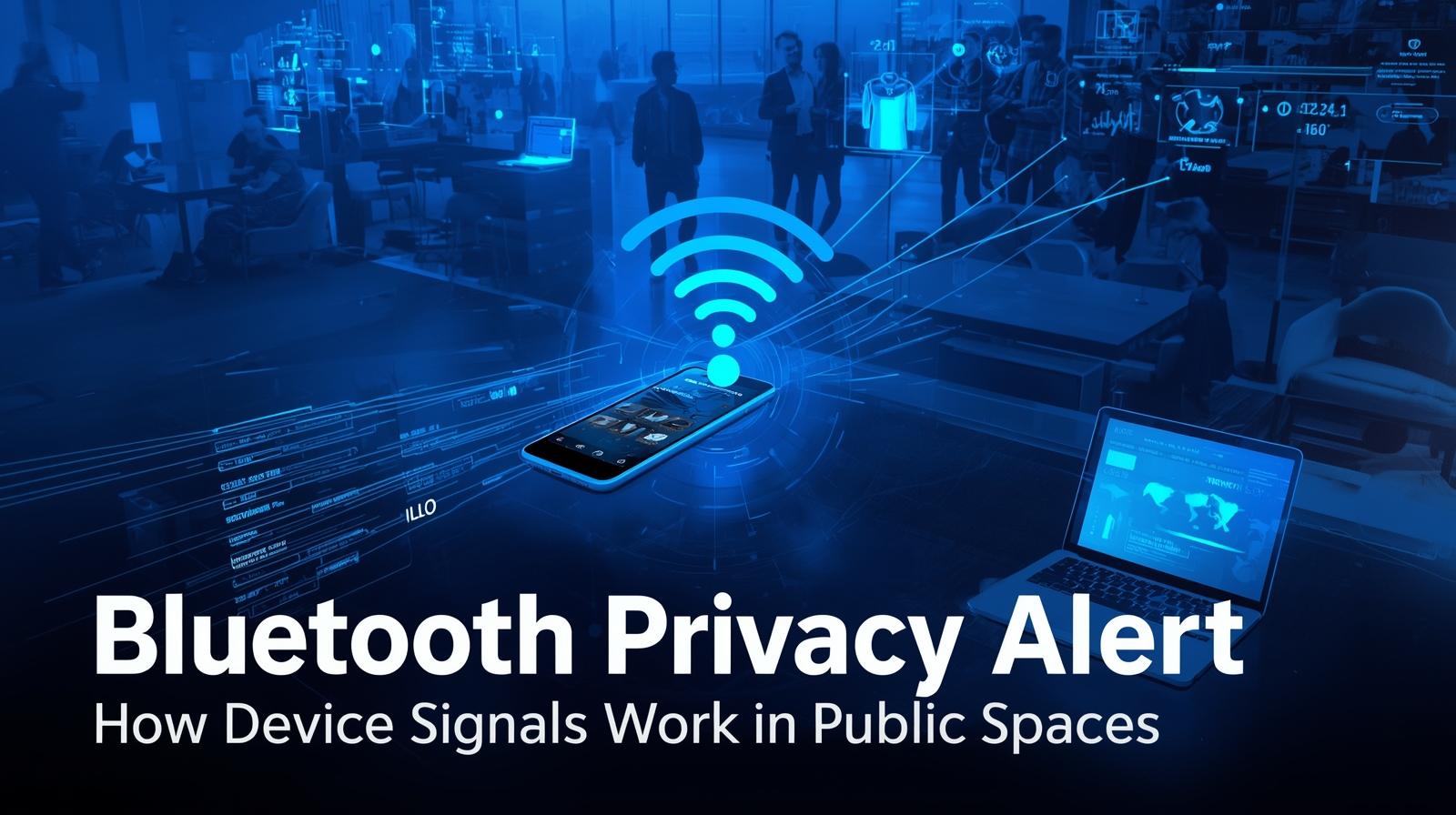
Retailers, airports, and public venues sometimes deploy Bluetooth scanners and beacons that detect nearby devices. These systems can measure foot traffic, analyze movement patterns, and understand how people move through physical spaces.
In many cases, users are unaware their devices may be broadcasting signals that can be detected by nearby tracking systems.
How Bluetooth Tracking Works
Bluetooth tracking systems rely on the fact that smartphones regularly send signals when Bluetooth is enabled.
These signals can be detected by scanners placed in buildings, stores, and other public areas.
The scanners collect information about nearby devices and analyze it to understand movement patterns.
Device Identifiers
Each Bluetooth-enabled device has a unique identifier known as a MAC address.
When Bluetooth is active, the device may broadcast this identifier when searching for connections or communicating with nearby devices.
Tracking systems can record these identifiers when a device passes nearby.
Over time, the collected data can reveal patterns about how devices move through a space.
Bluetooth Beacons
Many businesses deploy Bluetooth beacons—small devices that transmit signals to nearby smartphones.
When a phone detects a beacon, certain apps can trigger actions such as:
- Sending notifications
- Delivering promotions
- Collecting location analytics
Beacons are commonly used for indoor navigation, retail analytics, and event management.
Retail Analytics Systems
Some companies use Bluetooth tracking to analyze how people move through stores or shopping centers.
For example, a store may measure:
- How many visitors enter the building
- How long customers stay
- Which sections receive the most traffic
These insights help businesses optimize store layouts and marketing strategies.
Where Bluetooth Tracking Happens
Bluetooth tracking systems are used in a variety of public environments.
Airports
Airports often deploy wireless sensors to monitor passenger flow through terminals.
This data can help improve crowd management and security planning.
Shopping Malls and Retail Stores
Retailers sometimes use Bluetooth tracking to analyze customer behavior and measure the effectiveness of advertising displays.
Conferences and Events
Large events may use Bluetooth or beacon technology to manage crowds and provide digital services through event apps.
Smart City Infrastructure
Some smart city projects use wireless sensors to collect data about transportation, foot traffic, and public space usage.
These systems may rely on signals from nearby mobile devices.
Public Transportation
Buses, trains, and stations may use Bluetooth sensors to monitor passenger volumes and optimize service schedules.
Museums and Exhibitions
Cultural venues sometimes use Bluetooth tracking to understand which exhibits attract the most visitors and for how long.
Privacy Concerns With Bluetooth Tracking
Although Bluetooth tracking can support useful services, it also raises several privacy questions.
Device Fingerprinting
Even if a device identifier is randomized, repeated detections may still allow systems to infer patterns about a device’s movement.
Researchers refer to this process as device fingerprinting.
By analyzing signals over time, it may be possible to link multiple observations to the same device.
Movement Analysis
If a device is detected in multiple locations, the data could potentially reveal movement patterns such as:
- Commuting routes
- Frequently visited locations
- Time spent in certain areas
- Visits to medical facilities, places of worship, or other sensitive locations
Even when the data is anonymized, movement patterns can sometimes be linked to individuals.
Data Sharing and Selling
Companies that collect Bluetooth tracking data may share or sell this information to third parties, including data brokers.
Once data enters the commercial ecosystem, it becomes difficult to control how it is used.
Lack of Transparency
In many cases, individuals are not informed that Bluetooth tracking is occurring in stores, malls, or public spaces.
Signage about data collection is not always visible or clear.
Potential for Misuse
While most tracking is used for analytics, the same technology could theoretically be misused for surveillance purposes.
How Smartphone Platforms Are Addressing Bluetooth Privacy
To reduce tracking risks, smartphone operating systems have introduced privacy protections.
MAC Address Randomization
Both Android and iOS use techniques such as MAC address randomization.
This means the device identifier broadcast over Bluetooth changes periodically instead of remaining constant.
These protections make it harder for tracking systems to identify the same device over time.
However, experts note that no system completely eliminates tracking risks.
iOS Privacy Features
Apple has introduced several Bluetooth privacy features:
- Randomized MAC addresses by default
- App permissions requiring user approval for Bluetooth access
- Privacy labels disclosing data collection practices
- Location access controls for Bluetooth-dependent apps
Android Privacy Features
Google has implemented similar protections:
- MAC randomization enabled by default in recent versions
- Bluetooth permission categories (nearby devices, location)
- Privacy dashboard showing app permission usage
- Google Play Protect scanning for malicious apps
Limitations of Current Protections
Despite these improvements, researchers have identified potential weaknesses:
- Some randomization implementations can be bypassed
- Other signal characteristics may still enable tracking
- Apps with Bluetooth access can potentially collect data
- Legacy devices may lack modern protections
How to Reduce Bluetooth Tracking Risks
Users can take several steps to reduce potential Bluetooth tracking.
Disable Bluetooth When Not in Use
The simplest way to prevent Bluetooth tracking is to turn Bluetooth off when it is not needed.
This stops the device from broadcasting signals.
On most smartphones:
- iPhone: Swipe into Control Center → Tap Bluetooth icon
- Android: Swipe down notification shade → Tap Bluetooth icon
Review App Permissions
Some apps request access to Bluetooth features.
Review app permissions and remove access for apps that do not need it.
To check Bluetooth permissions:
On iPhone:
- Open Settings
- Scroll to individual apps
- Check Bluetooth access under privacy settings
On Android:
- Open Settings
- Navigate to Apps
- Select app → Permissions
- Review Nearby devices or Location permissions
Use Privacy Settings on Your Phone
Modern smartphones provide privacy settings that control wireless communication features.
Adjusting these settings can reduce unnecessary device broadcasting.
Key settings to check:
- Disable Bluetooth scanning (used for location services even when Bluetooth is off)
- Limit location access for apps that don’t need it
- Review advertising ID settings and consider resetting or limiting tracking
Update Your Device
Keeping your phone updated ensures you benefit from the latest privacy protections introduced by device manufacturers.
Enable automatic updates for:
- Operating system updates
- Security patches
- App updates
Be Aware of Your Environment
When entering stores, malls, airports, or event venues, be aware that Bluetooth tracking may be occurring.
If you are concerned about privacy, consider disabling Bluetooth before entering such spaces.
Use a VPN
While a VPN does not prevent Bluetooth tracking, it can help protect other aspects of your privacy, especially when using public Wi-Fi.
Consider Device Compatibility
If you use older devices that do not receive security updates, consider upgrading to newer hardware with better privacy protections.
Understanding Bluetooth Tracking in Retail
Why Retailers Use Tracking
Retailers cite several reasons for implementing Bluetooth tracking:
- Foot traffic analysis: Understanding how many people visit stores
- Dwell time measurement: Learning how long customers stay
- Conversion tracking: Measuring how many visitors make purchases
- Heat mapping: Identifying popular areas within stores
- Campaign effectiveness: Evaluating in-store promotions
Opt-Out Options
Some retailers provide opt-out mechanisms for tracking.
These may include:
- Signs explaining data collection practices
- Privacy policies with opt-out instructions
- Website forms to request data removal
However, opt-out is not always available or easy to find.
Industry Self-Regulation
Some retail analytics companies participate in industry self-regulation programs that establish standards for transparency and consumer choice.
These programs may include:
- Clear signage requirements
- Data retention limits
- Anonymization standards
- Opt-out mechanisms
Legal Landscape for Bluetooth Tracking
Current Regulations
Privacy laws addressing wireless tracking vary by jurisdiction.
In the United States:
- Sectoral approach with no comprehensive federal privacy law
- Some state laws (CCPA, CPRA, etc.) address personal information
- FTC actions against deceptive tracking practices
In the European Union:
- GDPR requires consent for tracking technologies
- ePrivacy Directive covers cookie-like technologies
- Stronger enforcement and higher fines
In other regions:
- Increasing number of privacy laws worldwide
- Growing recognition of tracking as a privacy concern
- Varying consent requirements and enforcement levels
Emerging Legislation
Several jurisdictions are considering or implementing new privacy laws that could affect Bluetooth tracking:
- Requirements for clear disclosure
- Opt-out rights for consumers
- Data minimization standards
- Restrictions on sensitive location data
The Future of Wireless Privacy
As cities and businesses deploy more connected technologies, wireless tracking systems are likely to become more common.
Technologies such as Bluetooth, Wi-Fi analytics, and IoT sensors are increasingly used to analyze how people interact with physical spaces.
At the same time, regulators and technology companies are working to strengthen privacy protections and transparency around data collection.
Emerging Technologies
New developments in wireless privacy include:
- Enhanced randomization techniques
- Privacy-preserving analytics that don’t identify individuals
- User-controlled data sharing models
- Blockchain-based consent systems
Industry Trends
Companies are responding to privacy concerns by:
- Developing privacy-focused analytics platforms
- Adopting transparency initiatives
- Implementing stronger data governance
- Providing clearer opt-out mechanisms
Regulatory Direction
Future regulations may address:
- Mandatory disclosure of tracking
- Consent requirements for data collection
- Restrictions on sensitive location data
- Data retention limits
- Enforcement mechanisms and penalties
Conclusion
Bluetooth technology powers many of the convenient wireless features people rely on every day.
However, the same signals that enable device connectivity can also be detected by nearby tracking systems.
Although most Bluetooth tracking systems are designed for analytics rather than surveillance, they still raise important privacy questions about how device data is collected and used.
By managing Bluetooth settings, reviewing app permissions, and staying informed about wireless technologies, users can take practical steps to protect their privacy in an increasingly connected world.
The key is awareness. Understanding that Bluetooth tracking exists—and knowing how to control it—gives users more choice over their digital privacy.
📱 Take control of your mobile privacy. Download our “Mobile Privacy Settings Guide” with step-by-step instructions for iOS and Android.
Related Resources
Internal Cyvack Guides
- Your Phone Apps Are Selling Location Data — How Companies Track Your Movements
- Smart TVs Are Tracking What You Watch — The Privacy Issue Most Users Don’t Notice
- Data Broker Companies Are Selling Your Personal Information — Here’s How the Industry Works
- Hackers Are Stealing Google Accounts Using Session Cookie Attacks — How to Protect Your Login
Official Platform Privacy Resources
Apple iOS Privacy
- Apple Privacy Overview
- iOS Privacy Features
- Manage Bluetooth Access on iPhone
- About Privacy and Location Services
Android Privacy
- Google Privacy & Security
- Android Privacy Features
- Manage App Permissions on Android
- Control Device Location Settings
Bluetooth Technology Information
Technical Overview
Privacy Research
- Academic Studies on Bluetooth Tracking
- MAC Address Randomization Research
- Beacon Technology Analysis
- Privacy Impact Assessments
Retail and Analytics Industry
Industry Practices
- Retail Analytics Overview
- In-Store Tracking Methods
- Customer Behavior Analysis
- Foot Traffic Measurement
Company Policies
- Retailer Privacy Policies
- Opt-Out Mechanisms
- Data Collection Disclosures
- Consumer Choice Options
Privacy Advocacy Resources
Organizations
- Electronic Frontier Foundation (EFF)
- Privacy International
- Center for Digital Democracy
- Future of Privacy Forum
Research and Publications
- Wireless Tracking Reports
- Location Privacy Studies
- Consumer Awareness Surveys
- Policy Recommendations
Legal Resources
US Privacy Laws
- California Consumer Privacy Act (CCPA)
- California Privacy Rights Act (CPRA)
- Virginia Consumer Data Protection Act
- Colorado Privacy Act
International Privacy Laws
Practical Guides
For iOS Users
- Step-by-Step iOS Privacy Settings
- Managing Bluetooth Permissions on iPhone
- Location Services Guide for iOS
- App Permission Review Checklist
For Android Users
- Android Privacy Settings Walkthrough
- Controlling Bluetooth Scanning on Android
- Location Permission Management
- Google Account Privacy Controls
Frequently Asked Questions
Q: Does turning off Bluetooth stop all tracking?
Disabling Bluetooth stops your device from broadcasting signals, which prevents Bluetooth-based tracking. However, other wireless technologies (Wi-Fi, cellular) may still be used for tracking.
Q: Can I tell if a store is tracking my Bluetooth?
Most stores do not provide obvious indicators when tracking is occurring. Some may post signs, but this is not universal.
Q: Is Bluetooth tracking legal?
In many jurisdictions, Bluetooth tracking is legal if companies comply with applicable privacy laws. Requirements vary by location and may include disclosure, consent, or opt-out options.
Q: Does MAC address randomization completely protect me?
Randomization significantly reduces tracking risks but may not provide complete protection. Researchers have found potential ways to bypass randomization in some implementations.
Q: Can apps track me through Bluetooth even when I’m not using them?
Apps with Bluetooth permissions can potentially collect data in the background. Reviewing and limiting app permissions helps reduce this risk.
Q: Does airplane mode prevent Bluetooth tracking?
Airplane mode typically disables wireless radios including Bluetooth. However, remember that Bluetooth can be manually re-enabled while in airplane mode.
Q: Are Bluetooth trackers (like AirTags) related to this privacy issue?
Bluetooth tracking discussed in this article refers to stationary tracking systems, not personal item trackers. However, both use Bluetooth signals for location purposes.
Tips for Different Situations
Shopping at Malls
- Consider disabling Bluetooth before entering
- Review store privacy policies if concerned
- Check for opt-out options on store websites
Traveling Through Airports
- Be aware that airports may use tracking for crowd management
- Disable Bluetooth if you prefer not to be detected
- Keep devices updated for latest privacy protections
Attending Conferences
- Event apps may request Bluetooth permissions
- Consider whether app features require Bluetooth
- Disable Bluetooth when not actively using event features
Using Public Transportation
- Transit systems may use sensors for passenger counting
- Bluetooth signals may be detectable at stations and stops
- Disable Bluetooth if you prefer not to participate